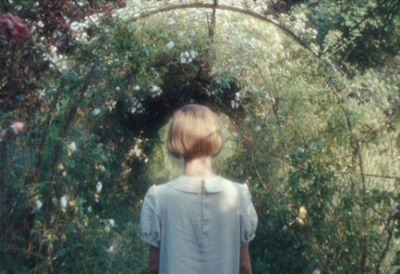
(Image from pinterest)
No doubt this will take me years and years on end and it might not even get anywhere but...
I have finally begun work on a extremely early draft script for a back to back version of all of both Carroll books. To do justice to Carroll's works, the adaptation will be 2 plays (for each book)
It will be set in 1998 in Devon and will be partially themed around loss.
In my version Alice is about 9 or 10 and is attempting to cope with the death of her Oxford dwelling grandmother who has gifted her Carroll's Alice books. She slips into fantasy whilst the rest of her family grieve.
I would describe it as Laura Wade's version meets Adrian Mitchell's version.
I am also slightly drawing on my own childhood living in Devon, UK. Which for those of you who aren't familiar, is a small region which is mainly rural, made up of countryside, seaside towns and the occasional city.
I had the idea to do this when I was talking with a friend about how to best adapt Carroll and she advised me to "write what I know". I know about quiet, sleepy seaside towns where nothing happens because I grew up in one.
It also didn't feel right setting it now... because I'd have to deal with the internet's omnipresent presence!
Thanks for reading,
Chloe :)

Alice joined the procession, wondering very much what would happen next.
`It’s—it’s a very fine day!’ said a timid voice at her side. She was walking by the White Rabbit, who was peeping anxiously into her face.
`Very,’ said Alice
Art for Carroll's Alice's adventures in Wonderland by Gertrude Kay
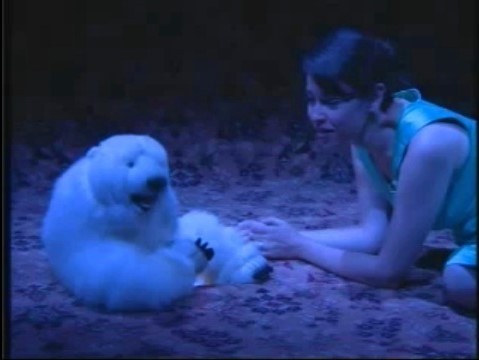 Like Alice in Wonderland by David Lynch - Quote from Telegraph Critic Mark Brown
Content warnings for: Mental health portrayal, also one NSFW scene involving a talking goat. No really.
Premiered: Edinburgh festival, 2006
Good god, I adored this script.
Like Alice in Wonderland by David Lynch - Quote from Telegraph Critic Mark Brown
Content warnings for: Mental health portrayal, also one NSFW scene involving a talking goat. No really.
Premiered: Edinburgh festival, 2006
Good god, I adored this script.
For an Alice-type tale aimed at an adult audience this is one of the best I’ve read.
Poor Lisa Jones. She’s been tasked with finding a “lost hour” of her life in Dissocia, a place that makes Carroll’s dreamworlds of Wonderland and Looking-Glass World look mildly hospitable. Soon after meeting a bizarre watchmaker with unusual drinking preferences, and after hurtling down a lift shaft, Lisa tries to contend with insecure security guards, a man who has literally lost his inhibitions, the worlds most horrifying scapegoat and a friendly polar bear- who sings about death. But there’s also the Black Dog, a ruthless monarch who terrorizes Dissocia’s residents, plunging the land into war.
Neilson, a Carrollian by name - he’s actually adapted Carroll’s Alice in 2017, no less- plays around with Carrollian ideas so much it makes your head spin.
On one level, thirty-something Lisa is a hybrid of lost protagonists found in surrealist works and Carroll’s Alice. Except that Lisa is not seven and a half and not innocent. Her Alice-like wonderment masks a darker insincerity- she’s actually suffering a ton of problems at home and has a strained relationship with boyfriend Vince. This being Neilson, there may be a real chance that Lisa may never make it back home.
And then act 2 pulls the rug from underneath your feet. I’m not going to spoil it, but any hints that Lisa’s misadventures are actually the result of something much darker are very very true.
The journey she undertakes too, is fraught with darkness at the edges. If Carroll’s Alice books have vaguely uneasy characters (The Duchess, The Queen of Hearts, the pig baby, the train passangers, the mutton) and a slightly off kilter atmosphere, then Neilson takes this idea and runs with it. In Dissocia, no one is what they seem and even the nicest of people and creatures that Lisa encounters seem to be hiding something implicitly.
One gets the sense of Neilson setting up Carroll-esque plot tropes, only to take them in newer, creepier directions. The scene with the Goat is flat out horrible, as is Lisa’s attempts to deny the situation by singing, ending in her curling up into a ball and crying in horror.
If anything, Neilson’s Dissocia shows us that for characters, falling down a rabbit hole or going through a looking glass in childhood may be wonderous and slightly unnerving, doing this in adulthood may be their undoing. That rabbit hole may end up leading to a far darker place than you expect.
Brrr...

