Thursday, 25 July 2019

Down the Rabbit Hole Project: Little Fugitive (1953)


Related image


I am waiting for Alice in Wonderland, to retransmit to me, her total dream of innocence
Lawrence Ferlinghetti, I am waiting, from the poetry collection A Coney Island of the Mind (1958)

SPOILERS (NOT THAT THERE'S MUCH OF A PLOT ANYWAY...) 

NEXT WEEK: Zazie Dans Le Metro (1960) 

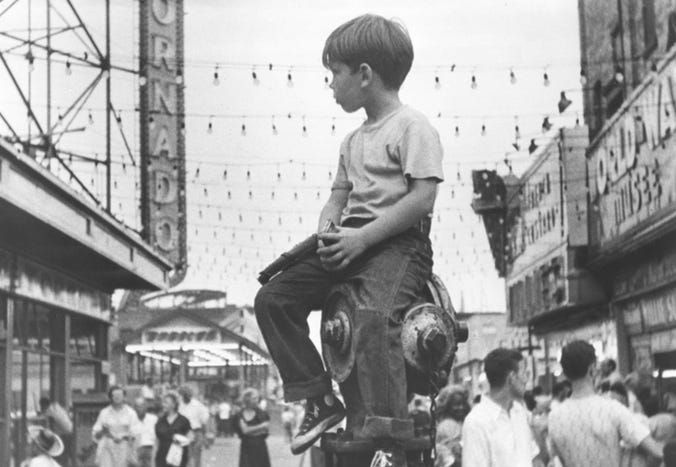
New York dwelling 12 year old Lennie is sick of babysitting his 7 year old younger brother, Joey. After a family incident leaves them alone for the day, Lennie devises a cruel prank on his brother. A frightened Joey runs away and seeks solace in the Wonderland of corney island. 

This is probably the most obscure film I've looked at so far.  I'd never heard of it before viewing. The fact I'm from the UK and not from the US perhaps didn't help on that matter. This is one film which is strictly US centric.  The only way you would be familiar with this work is if you are a film student (presumably from the US) or a film academic. I am neither, and I must confess the idea of looking at this daunted me. 

Related image

The reason why Little Fugitive is a staple of US film academia is because it was one of the first films to utilize hand-held camera and nonprofessional actors. Its direcing team, Morris Engel and Ruth Orkin, are considered pioneers of the form, and pushers of cinema as art. This method (particularly the long, drawn out sequences of Joey on the rides at corney island) would later influence the critically lauded French New Wave in Europe. The film also captures the ideal of a "perfect" 1950s new York in which no harm comes to anyone (although anyone with an idea of history knows this wasn't exactly the case) 

So we know its historical importance, but why am I covering this here, in a carrollian space? 

This film was one of 15 to be chosen for ACMI's 2018 Alice is Everywhere film festival. The festival had a range of films covering carroll-esque narratives, from the obvious to the subtle. Little Fugitive fits on the extremely subtle end of the scale. If you don't go looking for Carroll, you really won't find it.

And yet there are some parallels. 
But her sister sat still just as she left her, leaning her head on her hand, watching the setting sun, and thinking of little Alice and all her wonderful Adventures.
Lennie and Joey's fraught sibling relationship has something of Alice and her sister's in it. Both pieces feature a seven year old sibling and a much older brother or sister. In both tales one sibling drives the other to seek solace in a place of unfamiliarity. Alice dreams of Wonderland due to her sister's book being uninteresting and the day being too hot, Joey runs away to corney island because of his brother's actions.


Related image


 Alice had begun with `Let's pretend we're kings and queens;' and her sister, who liked being very exact, had argued that they couldn't, because there were only two of them
Beforehand, Lennie makes it clear he considers Joey a liability. In Through the Looking-Glass it is hinted that Alice's sister is exasperated with Alice's pretend games. Just like Joey's wish to go to Corney island, Alice's second curious dream (of looking glass world) is also partly stemmed from an argument. 

Image result for Little Fugitive 1953

Once Joey runs away, like Alice, he is a child lost in an alien environment. Free of any parental guidance and siblings he explores every nook and cranny of Corney island. For Joey, corney island is just as weird and fabulous as imagined dream worlds are to Alice. 

Related image
but, oh dear!’ cried Alice, with a sudden burst of tears, `I do wish they WOULD put their heads down! I am so VERY tired of being all alone here!’
Joey begins to miss home after being reminded of Lennie's harmonica. Similarly Alice becomes homesick after remembering her cat Dinah and going through one strange situation too many. Alice's experiences of Wonderland sour more quickly than Joey's experiences of Corney island, although both get tired or exasperated in their adventures. 

Whilst the narrative in little fugitive is resolved quickly via Lennie finding Joey. In both Wonderland and Looking Glass World there is technically no one to find Alice (until she awakens, that is). In Wonderland she finds this idea a worry, whereas in Looking Glass World she finds it more of a liberating joy. 

Overall Little Fugitive is a interesting curio and snapshot of 1950s new York. It is however one with is perhaps best suited to scholars and film students. Some may find its long corney island scenes and lack of dialogue frustrating.  Although it works well as a historical document, I question how well it works as a film without its context. 

NOTES:

  • Watch the film in full here.
  • This film is permanently in the archives of MOMA museum in the US and is occasionally screened there.

Tuesday, 23 July 2019

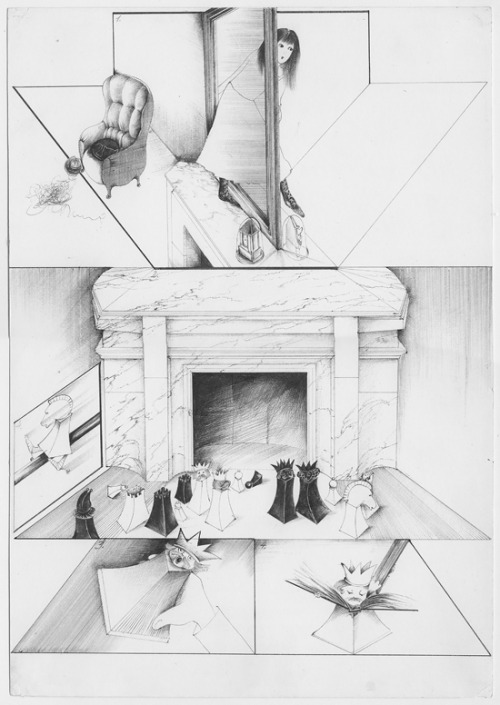
Looking-Glass House by Markéta Kolíbalová for Carroll’s Through the Looking-Glass

Looking-Glass House by Markéta Kolíbalová for Carroll’s Through the Looking-Glass
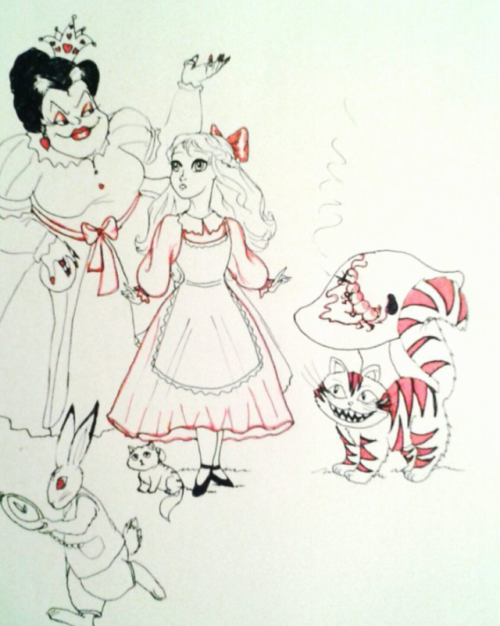
Character designs for Carroll’s Alice’s adventures in Wonderland by salemcattish

Character designs by salemcattish.art for Alice's adventures in Wonderland

Monday, 22 July 2019

Down the Rabbit Hole Project: Labyrinth (1986)


SPOILERS (SORRY!) 

ALSO THIS WEEK: Little Fugitive (1953) 

I haphazardly try 1 review (this) and one essay (Little Fugitive) in a week... wish me luck!

Sarah lives in a fantasy world where she re-enacts scenes from her favourite book, the Labyrinth. Her parents would rather have her assume responsibility for her baby brother, Toby. During a moment of frustration Sarah wishes Toby be taken away by Jareth, the goblin king. 

With 13 hours to get her brother back, Sarah soon finds herself traversing a seemingly impossible labyrinth teeming with goblins and other strange beings. 


Where Mirrormask (2005) tried yet ultimately failed, Labyrinth succeeds. Presenting an extremely mainstream yet compelling take on the rabbit hole trope, and several interesting themes in subtext. It also boasts a full production by the Jim Henson Company and several big names (terry Jones, George Lucas, David Bowie) in production and in acting duties.

Mostly avoiding Mirrormask's pitfall of over explanation, Labyrinth also contains more moments of Carroll-esque nonsense, as well as several other references to children's literature in general. The fact it also has a story of its own and these references don't feel purely mindless is commendable. 

Down the Rabbit Hole


Down, down, down. Would the fall NEVER come to an end!
There are at least three references to descending down holes in this film.

The most pronounced reference to Alice's decent down the rabbit hole is when Sarah stumbles down a pitfall after choosing the wrong door in the stone labyrinth (more on door references later). The pitfall that leads to the oubliette contains hands which ask her which way she wants to fall. Like any Carroll-esque protagonist, she directs to fall downwards, unaware that this is the wrong choice. 

 down went Alice after it, never once considering how in the world she was to get out again.

Carroll's Alice descends to Wonderland by choice. She is for the most part unafraid of hurtling through the earth.


I almost wish I hadn’t gone down that rabbit-hole.

Alice later regrets having fallen into Wonderland and talks longingly of home and specifically her cat Dinah. 


Sarah similarly quickly regrets giving Toby to the goblin king Jareth, and later regrets her misplaced arrogance. The labyrinth is not a piece of cake after all. Sarah's regrets, unlike Alice's, are more tied to bursts of teenage frustration. 


Arguments over doors.


Sarah's frustrating conversations with 2 sets of doors recall both scenes in Wonderland and Looking Glass World where Alice argues with frogs over the ethics of door knocking.

The doors leading to the oubliette or the castle that either always lie or tell the truth make an interesting parallel with Carroll's frog doorman in Looking Glass World. One of his presumed colleagues insists there is no admittance into Alice's coronation banquet until
 the week after next!' 
and when Alice attempts to get in the normal way,  the frog doorman scolds her for answering it.
 he went up and gave the door a kick with one of his great feet. `You let it alone,' he panted out, as he hobbled back to his tree, `and it'll let you alone, you know.'

Similarly Sarah infuriates the riddle doors by constantly flipping back on her decisions.

The two doors which Sarah encounters later in the garden labyrinth constantly bicker and cannot process her request to be let through due to being so wrapped up in arguing.

Alice in Wonderland argues with a frog footman after he claims she can't go through because they are both on the same side of the door.
I’m on the same side of the door as you are; secondly, because they’re making such a noise inside, no one could possibly hear you.’ 
 Both Alice and Sarah take matters into their own hands by ignoring the doormen and going through anyway. 


Looking-Glass House and eternal childhood, and encroaching adulthood
In another moment Alice was through the glass, and had jumped lightly down into the Looking-glass room. 
The most interesting section of the film occurs after Sarah has broken out of her fantasy of adulthood at the ball and is ushered by a woman carrying furniture on her back into a house. The house is an exact replica of Sarah's bedroom, where she can delude herself that her adventures were unreal and play with toys forever.

`Oh, I've had such a curious dream!' said Alice.


In a way, Sarah's wish for her adventures to be unreal ironically mimics then subverts the endings of both Alice novels, where Alice's adventures in both Wonderland and Looking-Glass World are only strange dreams. Sarah's adventures instead prove to be more real, although to what extent is debatable.


For an adult viewer it is clear that the false house scene is a potential metaphor for total childhood forever. Like Coraline (2009) the film paints this as hollow and unnatural.  

Being offered her favourite toys by the woman carrying furniture, Sarah realises they are only objects and won't help her. After Sarah remembers her budging adult responsibilities to Toby, the room shatters, leaving her to face up to her quest. 

It is interesting to compare this to the Looking-Glass House chapter of through the Looking-Glass.

Much like Sarah, Looking-Glass house and the world beyond offers childhood far away from a reality that would force Alice to grow up before she is potentially ready. 

 However because Sarah is 16 years old and not 7 and a half, this ideal becomes twisted and hollow. In accepting the quest to go to goblin city and save Toby, Sarah has accepted that she is no longer in childhood. 


Neither is Sarah completely happy with adulthood. 

The When the World Falls Down sequence plays with Sarah's dreams of romance and adulthood, but this is only shown to be an unattainable delusion which she grows unhappy with.  

Towards the end of the film, Jareth admonishes her for pinning expectations on to him that he can't fill. Sarah appears to be in love with the idea of love, but is not old enough to make the full leap into adulthood yet. 

Jareth may have no power over Sarah, but in the end its Sarah's expectations that have been demolished.


There is a sense of an old archetype being seen again when back in reality Sarah gains a new appreciation of her home and a firmer sense of self. It is worth noting that this is more influenced by Baum's novella the Wizard of Oz (and its 1939 film version) than Carroll's Alice.

The ending implies that she could go back to the world of Jareth whenever she wishes, and like most carroll-esque things, the way back might be through a mirror... 

NOTES:


  • The songs in this vary in quality, but "When the World falls down" and "Underground" are gold. "Underground" in particular is about both the film and also the rabbit hole trope in general. Nice. 
  • Terry jones apparently wrote the script 15 + times. 
  • According to this screenshot, the character of Sarah has read Alice more than a few times... (it’s the red book on the right!)