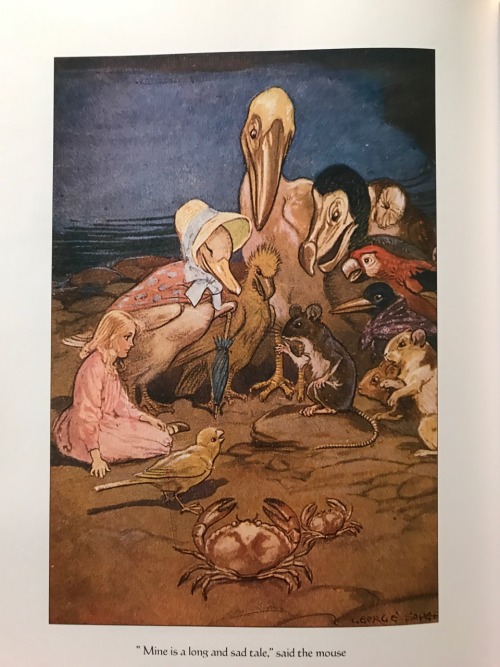
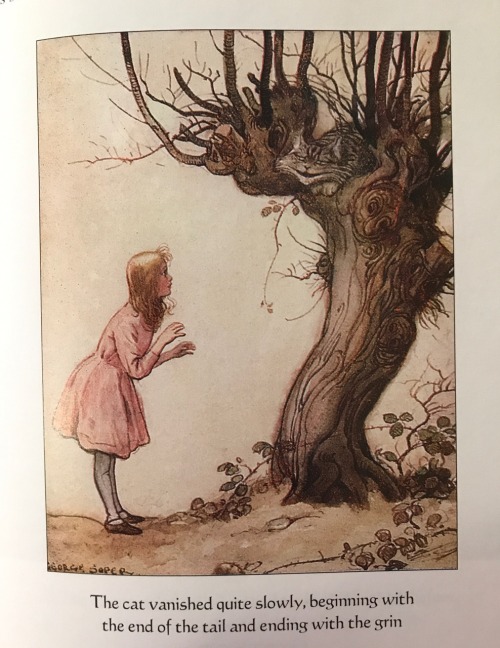
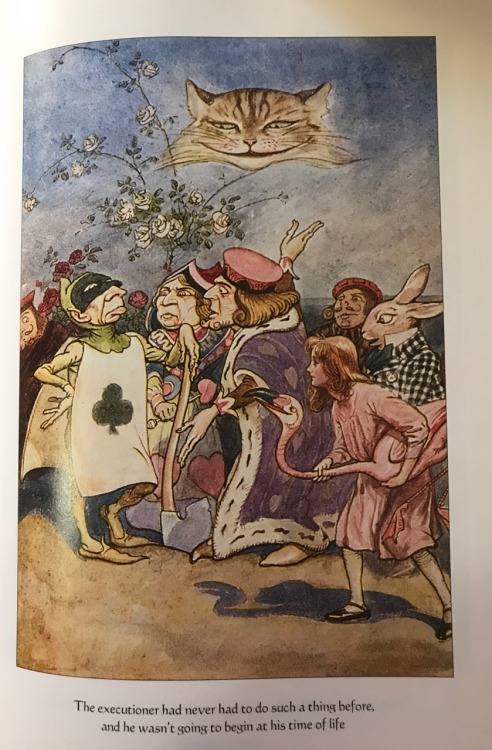
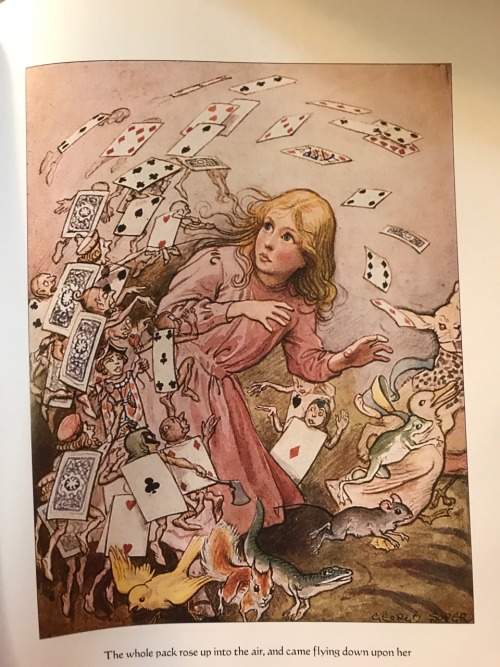
Plates by George Soper, via Alice-liddell-in-wonderland
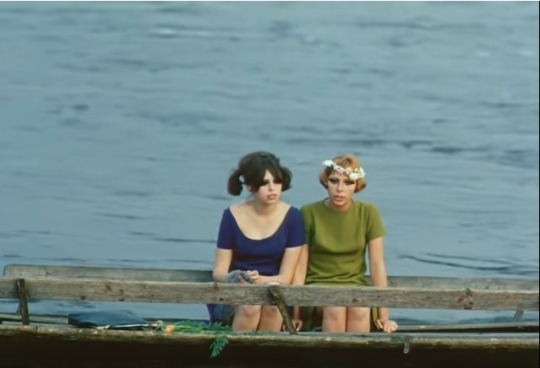
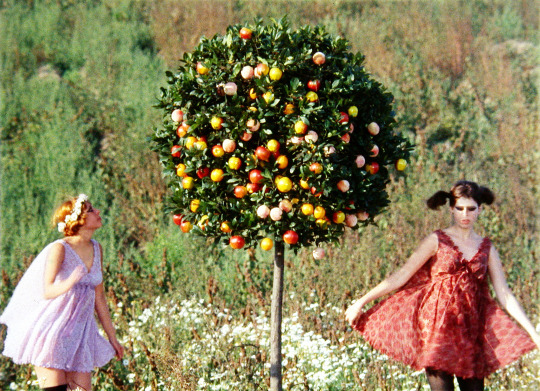
Alice ventured to taste it, and finding it very nice, (it had, in fact, a sort of mixed flavour of cherry-tart, custard, pine-apple, roast turkey, toffee, and hot buttered toast,) she very soon finished it off.After both Maries decide to go bad, the scene shifts from bathing pool to a large field of daisies with a large fruit tree in the centre. The Maries dance around, fascinated, and Marie 2 plucks a peach from the tree and begins to eat it. This scene is an obvious allusion to the garden of Eden tale in Christian theology, but what differentiates this from a straight reference is that there is no tempter (the Maries do this on their own accord) and that the Maries are not punished for this gain of knowledge.
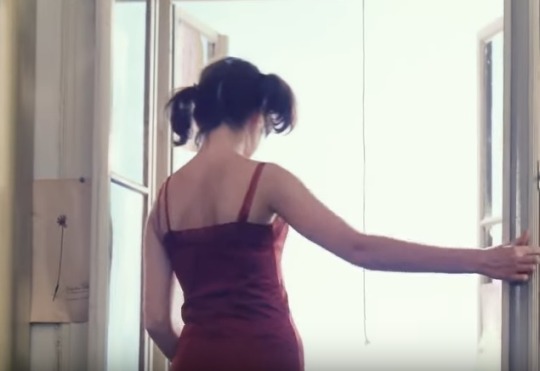
It seemed quite dull and stupid for life to go on in the common way.On entering their apartment after the consumption of the fruit, Marie 1 looks out of the window and asks “what’s out there?” Their decision to “go somewhere lovely” contrasted with the dull street view implies that there is no wonder in the place they are in. Unlike Carroll’s Alice, who is adrift in strange worlds, Marie and Marie are stuck in a place which they find to be perpetually boring, and to have fun, they must liven things up themselves. Consequentially their game of spoiled could be seen as a distraction from boredom because doing anything, no matter how random, is more interesting to them than conforming to a dull life.
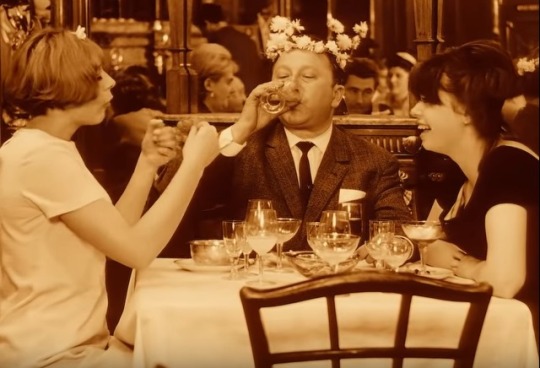
The Hatter’s remark seemed to have no sort of meaning in it, and yet it was certainly English.The scenes in which the Maries taunt and confuse older men in restaurants consist of absurd dialogue and large amounts of eating. The line is drawn between the Maries and their confused lecherous dates. In one scene the Maries juggle apples, laughing, whilst their dates look on laughing nervously in utter confusion, in another scene Marie 2 eats every food item on the menu just to make her date feel uncomfortable. There is a slight sense of a reverse Wonderland mad tea party or reverse looking glass banquet, with the Maries trying everything to annoy their dates instead of arguing or looking in curiosity. In scenes such as this one the Maries are shown to not always be willing to play the role of Alice, and come across more like Wonderland/Looking-Glass World inhabitants instead.
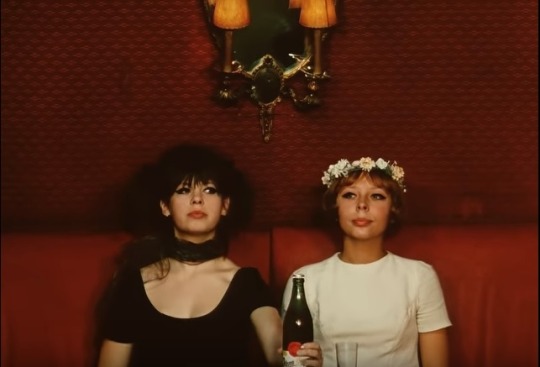
She hastily put down the bottle, saying to herself `That’s quite enough"Similarly to the dinner scenes, another disruptive scene involving food and public places occurs in a cabaret bar. This is filmed like a piece of silent slapstick comedy, with both Maries discovering alcohol and drunkenness, which leads them to disrupt the show, much to the disappointment of the Charleston dancers and the dull diners. Despite their disruptive behaviour, no one can seem to take their eyes off them, for once they are centre of attention in a place that does not value them.
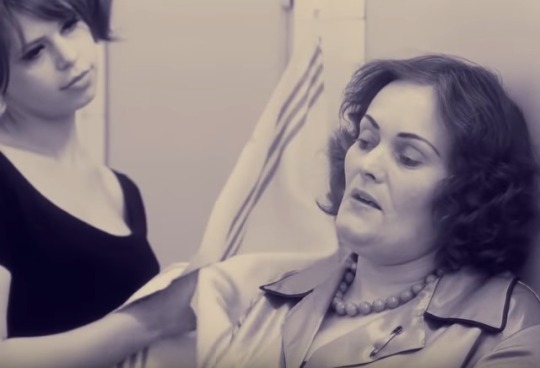
But her sister sat still just as she left her, leaning her head on her hand, watching the setting sun, and thinking of little Alice and all her wonderful Adventures.If the society of 1960 communist Prague does not value the Maries, certain people they meet in their misadventures do. A middle aged cleaner in the toilets they put makeup on in has a deep affection for the Maries (she is the closest thing to a parental or familial figure the film shows) and it is hinted strongly that she adores them because they remind her of her younger self.
“My Youth, my Youth, where have you gone? Why do tears come into my eyes, at the very thought of you?”Unlike the Maries, her curiosity and sense of wonder has dwindled the more older and conformist to society she grows. Similarly as the Maries dance around with chairs out of boredom in a restaurant, a middle aged waiter stops for a second and gives them a warm smile.
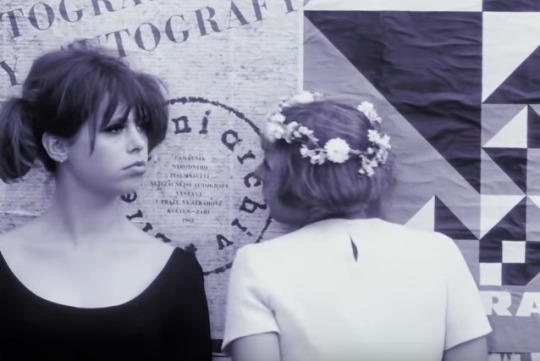
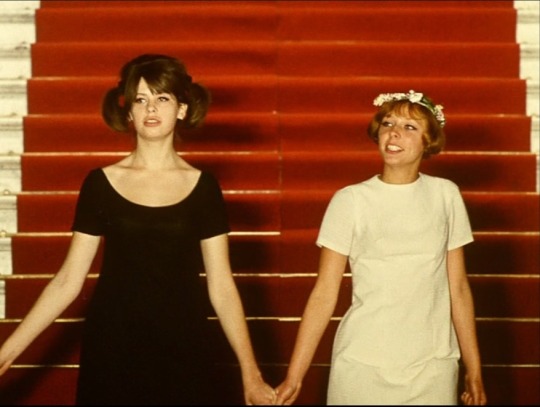
`Well, it no use your talking about waking him,’ said Tweedledum, `when you’re only one of the things in his dream. You know very well you’re not real.‘ “I AM real!” said Alice, and began to cry.In one of the film’s most interesting scenes, Marie and Marie bathe and talk philosophy, specifically the concept of existing. Marie 1 delights in taunting Marie 2 by pointing out that she is “not registered at this address”, and has "no employment” Marie 1 gleefully comes to the conclusion that “there’s no evidence of” Marie 2 at all. Preoccupied with notions of existence they decide to go out again, but things are not the same. Once they go through a hole in a wall they are in the countryside. There, a man and his dog look right through them, and factory workers cycling round don’t seem to see them. Marie 2 is disturbed by this: “Why didn’t he tell us off at the least?” Despite Marie 1’s assertion that they do exist after all, this throws up several questions at the viewer. Are the Maries one sole person? Are they lost girls who have wondered into a place where they no longer exist? Is anything that the Maries are experiencing real?
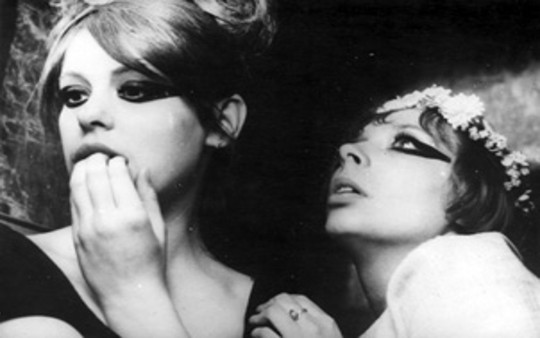
Alice had not a moment to think about stopping herself before she found herself falling down a very deep well.Similarly to fellow Czech Jan Svankmajer’s surrealist adaptation of Alice’s adventures in Wonderland (Alice, 1988) the Maries in Daisies reach the final place in their self-designed Wonderland by a lift shaft, searching for food in a government building they go up several floors, full of unexpected places. They see a butchers and apparently zoom past a string quartet in an opera house which is in full performance. When they arrive at their destination, they are wide eyed at their surroundings, twirling round in amazement. The fact that the director frames the places they glimpse in the lift shaft in different colours heightens their unreality, like in Svankmajer’s Alice lift shafts are here passages to other imagined areas. Of course this also evokes comparisons with Carroll’s Alice plunging down the rabbit hole.
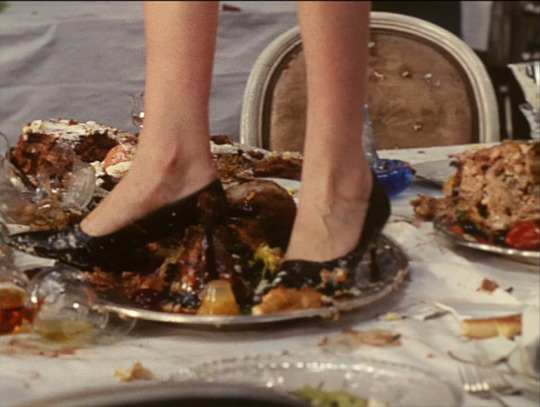
One good pull, and plates, dishes, guests, and candles came crashing down together in a heap on the floor.Once up the lift shaft in the government building the Maries come across a feast for government officials. Hungry they eat then decide to joyfully wreck everything in sight. At this moment the film does a complete 180 and offers up an alternate ending of sorts where the Maries are forced to pay penance for their behaviours. This results in a chandelier crashing on them both.