(ALL IMAGES VIA THEATRE DU VILLE, TAKEN BY Jean-Louis Fernandez)
...Remember when I used to do theatre reviews for this blog? Its been a while.
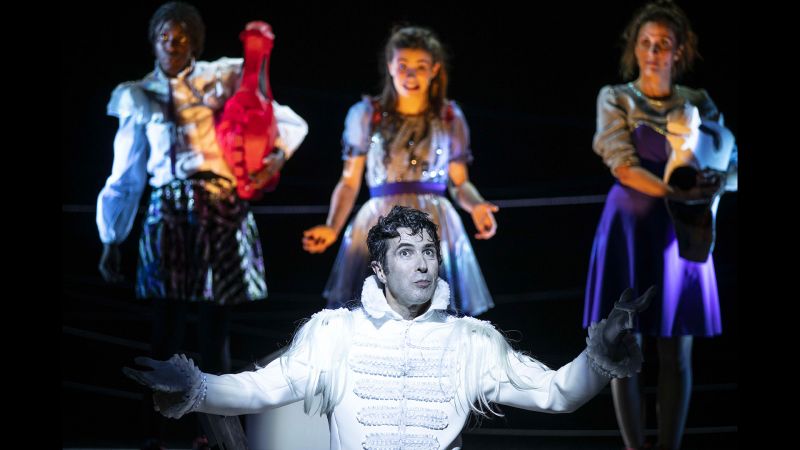
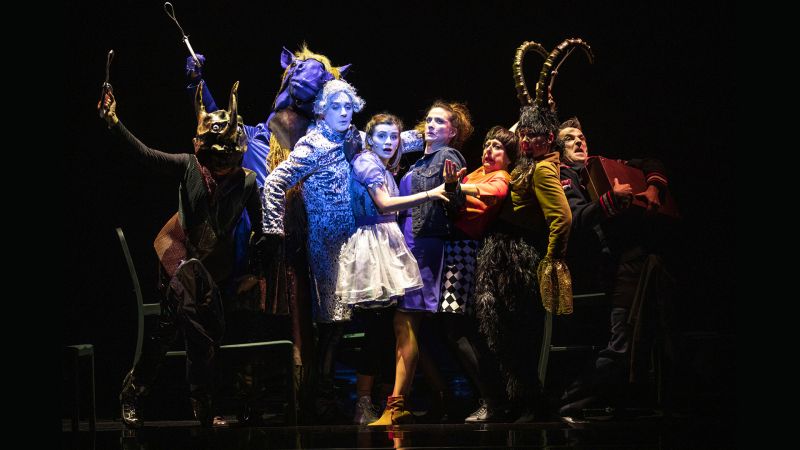
In January I managed to get to see the livestream of Theatre Du Ville’s Alice (both parts) in French. Although I have an extremely limited understanding of French (J'étudie le français en ce moment!) I enjoyed the plots of these two highly unique versions (a vague synopsis was thankfully available via downloadable programmes). The cast did a formidable job, some actors playing up to 5 characters per adaptation! As with all theatre du ville content, the staging was exceptional and at some points, gasp worthy. Not dissimilar to the production value of the UK’s National Theatre, which also enjoys a large budget for shows.
A Unique Vision
Made in 2013 and 2020 respectively by Frabice Meliquot (of Alice in China infamy) and Emmanuel Demarcy-Mota, theatre du ville’s 2 adaptations feature a teenaged, 17 year old Alice (played in the revival I saw by Isis Ravel) dreaming her way into not just Wonderland and Looking Glass world but also accidentally bumping into other famous literature characters.
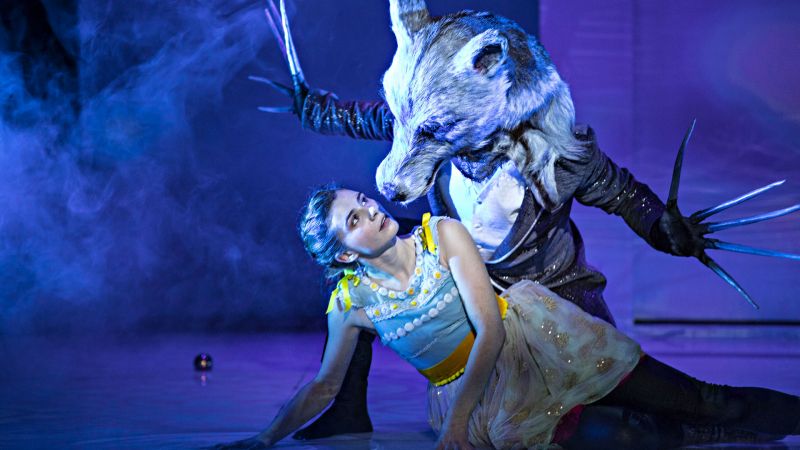
In Wonderland, Alice is teased by a mermaid type figure whilst in the pool of tears, is annoyed and fascinated by Collodi’s Pinocchio, and discovers adolescence via dancing with the wolf from red riding hood. In part 2, whilst in Looking Glass World, Alice becomes entangled in a bizarre who is dreaming what scenario. This involves herself, Zazie from Zazie in the metro, Dorothy from Beaum’s the Wonderful Wizard of Oz and a modern girl named Rose.
The casual carrollian may wonder what the point of this is, but in cross referencing these works as well as using random blasts of British songs in certain scenes (case in point: Unicorn’s entrance in part 2 is soundtracked to David Bowie’s Space Oddity: yes really) Melquot and Mota seem to be making a statement about British culture of many eras surrounding the Alice books, and how the tales fit in with other world literature. Also, its a fun idea, and Carroll himself was always playful, so why shouldn’t adaptations be this way? Plus, these adaptations already adapt all of both books, so us purists are well catered for.
Alice and her dreams of Wonders
Except for when Alice awakens at the end of each adaptation, Meliquot and Mota‘s adaptations are entirely cocooned in their protagonist's dream-worlds. In this adaptation, reality is not important and the circumstances of Alice’s dreams matter even less. There is however one major theme threaded among both parts, Alice’s maturing into adolescence and a hint of coming of age. This is thankfully done very subtly and does not overtake Carroll’s narratives or the cultural playfulness these adaptations use. Instead Alice’s growth and shrinking and encounters with the Cheshire cat, red riding hood wolf, white knight, and eventual coronation across both parts are seen here as metaphors for growing older.
This theme, coupled with the dark-playful tone of these adaptations, reminded me greatly of a toned down Valerie and her Week of Wonders. There is even a scene where the Cheshire cat, during the famous “we’re all mad here” conversation, enfolds Alice with a coat, directly reminding me of a scene from the film version of Valerie. (Picture comparison below)
Tone and acting styles
I very much respect these adaptation's ideas to not go cutesy either, Sarah Karabasnikoff‘s Duchess, Jauris Casanova‘s wolf and Karabasnikoff‘s sheep are acted as bizarre, funny and vaguely threatening characters. The Queen of Hearts enters to the song another brick in the wall part 2 by Pink Floyd, here re-framing the character as a sort of harsh headmistress type. But the fun is very much still there (with the queen of hearts entrance, the entire cast break out in dancing)
There were many standouts in terms of acting. Isis Ravel’s Alice positively embodied Carroll’s title character and gleefully ambled through wonders and horrors in a believable way. The Cheshire Cat wore a vast coat and was characterized by actor Gérald Mailet as being ambiguous as his grin. The Duchess’s baby was here seen as a fully grown man crawling around, Walter N’guyen putting in an amazingly horrifying and wonderful performance. The Red Queen, wonderfully snappish as played by Sandra Faure, carried a chess board in her hand constantly. The whole cast give their all and overall it works wonderfully.
Philosophy
In these adaptations there are also several points of philosophical musing, particularly in the looking glass adaptation. In her room, modern girl Rose goes through her mirror and meets up with Alice, as well as Zazie, and Dorothy, each bewildered to learn that the other exists. The question of who dreamed what in Looking Glass is in the book (there it was either Alice or the Red King) but by adding more players to this conundrum, Melliquot and Mota re ask the question as something more slippery and far odder. When Alice realizes that the dreamer is her at the end of Looking Glass, there is a real sense of despair in her eyes. Another point of this style of musing comes in Wonderland, where the Cheshire Cat sings and we see a video projection of Alice traversing the world itself. Similarly in the introduction to Wonderland, Alice speaks of Alice Liddell.
Mise en scene and direction
Other things that struck me were how stylish the mise en scene staging looked. Extremely well done video projections, occasional wild lighting, and stylish non typical costumes were exhibited in these productions. In particular Alice’s costumes, a yellow and white daisy dress in Wonderland and a sparkly purple party dress in Looking Glass, had a sense of style and modernity.
Perhaps the best way to sum up these beautiful adaptations would be from the programmes that were available to download before the streams. In a note, Theatre Du Ville states that Alice as a character is an “unlimited traveller and adventurer, “ and in these adaptations, there is definitely a sense of an endless story. Multiple Alices forever with curiosity, bounding through wondrous dream-worlds.
Now if only we could find somebody to provide sous-titres en anglais for this!